
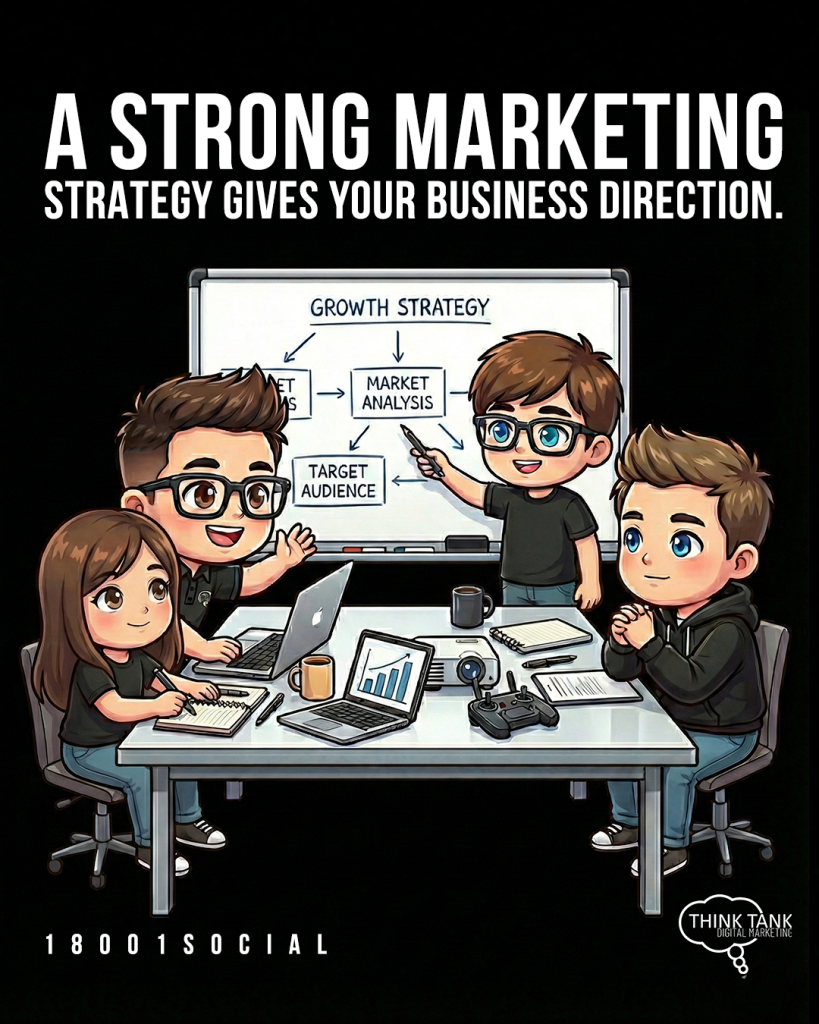
In business, we often hear phrases like “be everywhere,” “post more,” or “just run ads.” But for many business owners, especially those who think in structured, logical, or pattern-based ways, this kind of advice can feel overwhelming, unclear, and chaotic. This is where structured marketing becomes not just helpful, but essential. And, interestingly, many of the principles behind good marketing systems align closely with how autistic individuals often prefer to process information: clearly, logically, consistently, and without unnecessary noise.
This article is not about marketing to autistic people. It is about what marketing can learn from autism, particularly around clarity, systems, communication, and consistency.
Because when marketing is structured properly, it becomes calmer, clearer, and far more effective.
Clarity Reduces Overwhelm
Many autistic individuals prefer clear instructions, clear expectations, and clear communication. Ambiguity creates stress. Constant change creates fatigue. Mixed messages create confusion.
The same is true in marketing.
Most marketing doesn’t fail because businesses aren’t trying hard enough. It fails because the messaging is unclear.
Unclear marketing often looks like:
- A website that says too many things at once
- Social media that changes tone every week
- Ads that don’t match the website
- No clear explanation of who the business is for
- No clear next step for the customer
From a structured thinking perspective, this is not a creativity problem. It is a clarity problem.
Clear positioning.
Clear services.
Clear audience.
Clear next step.
When those things are clear, marketing becomes much easier to understand for both the business and the customer.
Systems Reduce Stress
One of the biggest myths in marketing is that it runs on creativity and motivation.
Good marketing actually runs on systems.
Systems remove the need to constantly decide what to do next. They create repeatable steps. They create predictability. They create stability.
For many autistic individuals, predictability and routine reduce cognitive load. The brain does not have to re-solve the same problem every day.
Marketing works the same way.
Instead of asking:
- What should we post today?
- Should we run ads this week?
- What should this campaign say?
- What are we even trying to achieve?
A structured system answers those questions before the month even starts.
For example:
- Week 1: Education post
- Week 2: Proof/case study
- Week 3: Authority/insight
- Week 4: Offer/call to action
Now marketing is not chaotic. It is scheduled. Predictable. Structured. Measurable.
Systems turn marketing from something emotional into something operational.
Consistency Builds Familiarity
Many autistic individuals build trust through familiarity and repetition. New environments, new people, and new expectations can take time to process and feel comfortable with.
Customers are not so different.
Most people do not buy the first time they see a business. They watch. They observe. They learn. They see if the business is consistent.
If a business looks different every week, sounds different every week, and talks about different things every week, customers don’t build familiarity. And without familiarity, trust takes much longer to build.
Consistency in marketing means:
- Same tone of voice
- Same colours and visual style
- Same core message
- Same type of content themes
- Showing up regularly
Repetition is not laziness in marketing.
Repetition is how customers remember you.
Pattern Recognition and Marketing Data
Another strength often associated with autistic thinking is pattern recognition, noticing trends, repeated behaviours, and systems.
This is exactly what good marketing measurement is.
When we track marketing properly, we start to see patterns:
- Certain posts get saved more
- Certain services get more enquiries
- Website traffic increases at certain times of year
- Some ads work better than others
- Some suburbs respond more than others
Marketing data is not there to overwhelm you. It is there to show patterns.
And once you can see patterns, you can make better decisions:
- Do more of what works
- Fix what doesn’t
- Stop guessing
Measurement turns marketing into a learning system rather than a guessing game.
Clear Communication Builds Trust Faster
Many autistic people communicate very directly and literally. They say what they mean. They don’t rely on hidden meaning or marketing fluff.
Interestingly, this is exactly what modern customers prefer now, too.
Customers are tired of:
- “We are passionate about…”
- “We strive to deliver…”
- “Customer satisfaction is our priority…”
These phrases are vague and meaningless because every business says them.
Clear communication sounds more like:
- “We help busy families keep their homes clean.”
- “We install and service air conditioning across the Shoalhaven.”
- “We build custom homes for families who want to live locally.”
Simple. Clear. Direct.
Clarity builds trust faster than clever wording.
Marketing Should Feel Calm, Not Chaotic
If there is one thing businesses can learn from structured thinking, it is this:
Marketing should feel calm.
Not silent.
Not inactive.
But calm.
Calm marketing means:
- You know who you are talking to
- You know what you are trying to say
- You know what you are trying to achieve
- You know what is working
- You know what the next step is
When marketing is structured, it stops feeling like noise and starts feeling like a system that supports the business.
Final Thought
There is a common belief that marketing is loud, fast, and constantly changing.
But the businesses that grow steadily over time usually don’t operate like that.
They are clear.
They are consistent.
They are structured.
They measure what matters.
They repeat their message.
They build familiarity.
They build trust.
In many ways, good marketing is not about being louder.
It is about being clearer.
And clarity, over time, compounds.
In business, we often hear phrases like “be everywhere,” “post more,” or “just run ads.” But for many business owners — especially those who think in structured, logical, or pattern-based ways — this kind of advice can feel overwhelming, unclear, and chaotic.
This is where structured marketing becomes not just helpful, but essential. And, interestingly, many of the principles behind good marketing systems align closely with how autistic individuals often prefer to process information: clearly, logically, consistently, and without unnecessary noise.
This article is not about marketing to autistic people. It is about what marketing can learn from autism — particularly around clarity, systems, communication, and consistency.
Because when marketing is structured properly, it becomes calmer, clearer, and far more effective.
Clarity Reduces Overwhelm
Many autistic individuals prefer clear instructions, clear expectations, and clear communication. Ambiguity creates stress. Constant change creates fatigue. Mixed messages create confusion.
The same is true in marketing.
Most marketing doesn’t fail because businesses aren’t trying hard enough. It fails because the messaging is unclear.
Unclear marketing often looks like:
- A website that says too many things at once
- Social media that changes tone every week
- Ads that don’t match the website
- No clear explanation of who the business is for
- No clear next step for the customer
From a structured thinking perspective, this is not a creativity problem. It is a clarity problem.
Clear positioning.
Clear services.
Clear audience.
Clear next step.
When those things are clear, marketing becomes much easier to understand for both the business and the customer.
Systems Reduce Stress
One of the biggest myths in marketing is that it runs on creativity and motivation.
Good marketing actually runs on systems.
Systems remove the need to constantly decide what to do next. They create repeatable steps. They create predictability. They create stability.
For many autistic individuals, predictability and routine reduce cognitive load. The brain does not have to re-solve the same problem every day.
Marketing works the same way.
Instead of asking:
- What should we post today?
- Should we run ads this week?
- What should this campaign say?
- What are we even trying to achieve?
A structured system answers those questions before the month even starts.
For example:
- Week 1: Education post
- Week 2: Proof / case study
- Week 3: Authority / insight
- Week 4: Offer / call to action
Now marketing is not chaotic. It is scheduled. Predictable. Structured. Measurable.
Systems turn marketing from something emotional into something operational.
Consistency Builds Familiarity
Many autistic individuals build trust through familiarity and repetition. New environments, new people, and new expectations can take time to process and feel comfortable with.
Customers are not so different.
Most people do not buy the first time they see a business. They watch. They observe. They learn. They see if the business is consistent.
If a business looks different every week, sounds different every week, and talks about different things every week, customers don’t build familiarity. And without familiarity, trust takes much longer to build.
Consistency in marketing means:
- Same tone of voice
- Same colours and visual style
- Same core message
- Same type of content themes
- Showing up regularly
Repetition is not laziness in marketing.
Repetition is how customers remember you.
Pattern Recognition and Marketing Data
Another strength often associated with autistic thinking is pattern recognition — noticing trends, repeated behaviours, and systems.
This is exactly what good marketing measurement is.
When we track marketing properly, we start to see patterns:
- Certain posts get saved more
- Certain services get more enquiries
- Website traffic increases at certain times of the year
- Some ads work better than others
- Some suburbs respond more than others
Marketing data is not there to overwhelm you. It is there to show patterns.
And once you can see patterns, you can make better decisions:
- Do more of what works
- Fix what doesn’t
- Stop guessing
Measurement turns marketing into a learning system rather than a guessing game.
Clear Communication Builds Trust Faster
Many autistic people communicate very directly and literally. They say what they mean. They don’t rely on hidden meaning or marketing fluff.
Interestingly, this is exactly what modern customers prefer now too.
Customers are tired of:
- “We are passionate about…”
- “We strive to deliver…”
- “Customer satisfaction is our priority…”
These phrases are vague and meaningless because every business says them.
Clear communication sounds more like:
- “We help busy families keep their homes clean.”
- “We install and service air conditioning across the Shoalhaven.”
- “We build custom homes for families who want to live locally.”
Simple. Clear. Direct.
Clarity builds trust faster than clever wording.
Marketing Should Feel Calm, Not Chaotic
If there is one thing businesses can learn from structured thinking, it is this:
Marketing should feel calm.
Not silent.
Not inactive.
But calm.
Calm marketing means:
- You know who you are talking to
- You know what you are trying to say
- You know what you are trying to achieve
- You know what is working
- You know what the next step is
When marketing is structured, it stops feeling like noise and starts feeling like a system that supports the business.
Final Thought
There is a common belief that marketing is loud, fast, and constantly changing.
But the businesses that grow steadily over time usually don’t operate like that.
They are clear.
They are consistent.
They are structured.
They measure what matters.
They repeat their message.
They build familiarity.
They build trust.
In many ways, good marketing is not about being louder.
It is about being clearer.
And clarity, over time, compounds.
If you need help with your marketing. We’re here to help, but I sincerely hope this helped with clearing the chaos.
Warm Regards
Jason